E-commerce personalization splits into two different jobs: recommending products and personalizing content.
Dynamic Yield, Nosto and Bloomreach lead product recommendations and merchandising. Content personalization (such as banners, promotions, messaging, landing pages, and campaign experiences) is a separate problem, and on headless storefronts it's where most stores leave conversions on the table.
Most comparison articles treat these as one category. They aren't, and picking the wrong type is the most common expensive mistake in e-commerce personalization.
Say goodbye to generic offers and hello to targeted, timely interactions that drive more revenue, boost ROI, and reduce CAC.
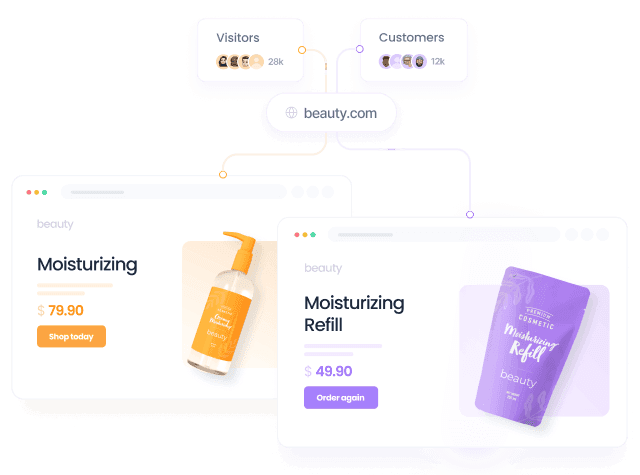
Two jobs, not one
Product recommendations answer "which products should this shopper see?" Customers who bought X also bought Y, recently viewed, trending in your category, personalized search ranking. This is an algorithmic problem driven by your catalog and purchase data.
Content personalization answers "what should this shopper be told?" A free shipping banner for a cart that's close to the threshold. A returning customer skipping the brand introduction. Visitors from a Black Friday campaign landing on the offer they clicked. A regional promotion for shoppers in one state. This is a targeting and content problem driven by context and behavior.
Recommendation engines do some content personalization, and content platforms can surface product blocks, but each is built around one job. Know which one is costing you conversions before you shop.
The options
| Platform | Primary job | Best fit | Headless storefront support | Server-side, no flicker | Entry price |
|---|---|---|---|---|---|
| Dynamic Yield | Recommendations, omnichannel | Large retailers | Experience APIs | Via API | Enterprise |
| Nosto | Recommendations | Shopify Liquid and Magento stores | ✅ | Varies | Mid-market and up |
| Bloomreach | Search and merchandising | Large catalogs | ✅ | Via API | Enterprise |
| VWO Personalize | Content and testing | Large stores | Via SDKs | Client-side by default | Enterprise |
| Optimizely | Experimentation and content | Enterprise retail | ✅ | ✅ | Enterprise |
| Croct | Content and testing | Headless storefronts | ✅ | ✅ | Free, then $100/month |
Dynamic Yield, owned by Mastercard, is the recommendation leader for large retailers, with strong algorithms and omnichannel reach across web, app, and email. It requires real engineering investment to implement through its Experience APIs.
Nosto is the faster path for Shopify Liquid (not Hydrogen) and Magento stores that want AI recommendations and behavioral targeting without heavy engineering.
Bloomreach combines personalization with site search and merchandising, which matters most for large catalogs where search is the main navigation.
VWO Personalize handles content personalization and testing with a strong visual editor. On fast storefronts, its client-side default can cause flicker.
Optimizely is the enterprise option for retailers running a formal experimentation program.
Where Croct fits, and where it doesn't
Croct is not a product recommendation engine
If your priority is "customers who bought this also bought," algorithmic ranking, or personalized search results, Dynamic Yield, Nosto, or Bloomreach are built for that, and Croct isn't (yet). Saying so plainly is more useful than pretending otherwise.
We built Croct for the content half, and it's particularly strong on headless and composable storefronts.
Store events flow in automatically
We integrate with Shopify Hydrogen, VTEX, Magento, Salesforce Commerce, and any e-commerce store that tracks recommended events. Some integrations track product views, cart views, cart changes, checkout starts, orders, and searches with no manual instrumentation, and each can serve as a conversion goal.
Audiences reflect real shopping behavior
Those events feed built-in visitor profiles, so you can target a returning buyer, a shopper who abandoned a cart, someone who arrived from a specific campaign, or a cart within reach of free shipping, all without a separate CDP.
cart's subtotal is between 80 and 100That's a free-shipping nudge for shoppers close to a $100 threshold, as a complete audience definition.
Nothing flickers
Content resolves on the server before the storefront is rendered. On Shopify Hydrogen, we resolve inside your loaders, so the page arrives personalized with no flash of default content. That matters more in e-commerce than anywhere else, because you're personalizing the pages you buy traffic to.
Testing is included
Every personalized experience can run against a control with Bayesian analysis, measured on revenue as well as conversion.
From personalization and experimentation to content and data management, we have all you need to deliver better user experiences.
Using both
Plenty of stores run a recommendation engine and a content personalization layer together, and the combination often makes sense: Nosto or Dynamic Yield decides which products appear, while a content layer decides the banners, promotions, messaging, and campaign experiences around them. Neither replaces the other.
What to personalize first
- Free shipping thresholds: Show the gap to free shipping to carts close to the line.
- Returning versus first-time visitors: Skip the brand introduction for people who've bought before.
- Campaign landing experiences: Match the page to the ad that brought the visitor.
- Regional promotions: Show offers only where they apply, so ineligible shoppers aren't frustrated.
- Cart abandonment recovery: Adapt the message for visitors who returned after leaving a cart.
How to choose
Choose Dynamic Yield if you're a large retailer and algorithmic recommendations are your primary revenue driver, or Nosto if you're on Shopify Liquid or Magento and want recommendations without heavy engineering.
Choose Bloomreach if you have a large catalog and search is how shoppers navigate.
Choose Croct if your storefront is headless and your priority is content, promotions, and campaign personalization with testing built in and no flicker.
You should also consider two tools if you need both recommendations and content personalization at scale.
For platform-specific guidance, see AB testing on VTEX and Shopify Hydrogen personalization. For the broader landscape, see the best website personalization platforms.